Before the Satnav Says You've Arrived: Auditing a Country Lane for Moving Day
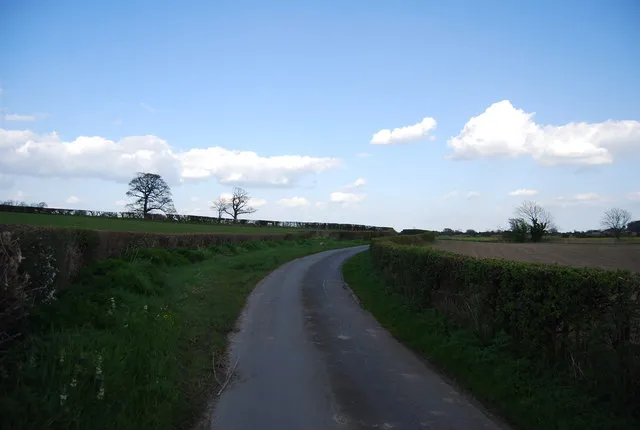
Photo: N Chadwick , CC BY-SA 2.0, via Wikimedia Commons
There is a particular moment on a rural move when the day stops being about sofas and starts being about geometry. The van has left the A-road, the satnav has confidently announced that you have arrived, and the driver is now nose-to-nose with a five-bar gate, a cattle grid and a hedge that has not been cut since the Queen's Jubilee. The house is visible. The van is not going anywhere near it.
That is why the final approach deserves its own audit. Not a vague squint at Google Maps, but a proper walk-and-measure of the route from public road to front door. It takes an hour or two, saves a stack of stress, and gives your removal crew the information they need before they commit a large vehicle to a small lane.
Start where the tarmac gives up
Begin at the point where the public highway ends and the private track begins. Walk or drive from the nearest classified road, and note the surface underfoot: proper tarmac, patched tarmac, compacted gravel, loose gravel, grass, mud, or a hopeful mixture of all five. Check the width of the lane and look for passing places. On a single-track road, the real question is not whether a van fits, but how many times it might have to reverse if it meets a tractor, a delivery driver or a horsebox.
Look up as well as down. Overhanging branches, telephone wires, low cables and the occasional low bridge can all turn a tall van into a convertible. A Luton van with the tail lift raised is taller than many people picture, and roof vents, aerials and bike racks add a few more centimetres. Photograph anything that looks tight, and note it in plain language: 'low cable across track just after second gate' is more useful than 'overhead issue'.
Measure the squeeze, not just the gate
Gateways are where rural moves are won or lost. Measure the actual opening between the gate posts or walls, not the width of the gate leaf. Then subtract a sensible margin for mirrors, nerves and the fact that the driver is unlikely to approach at the perfect angle. A standard Transit is around two metres wide; a Luton van is wider; a 7.5-tonne lorry is wider still. Mirrors count. So do gate hinges, stone walls and the little clump of ivy that hides a protruding post.
While you are there, check how the gate opens. Does it swing inward or outward? Is it padlocked? Who has the key? If livestock are nearby, who is responsible for moving them and closing gates again? A farm gate is not just an obstacle; it is a piece of working equipment. Treat it accordingly, and make sure your crew knows whether they are allowed to open it, and whether they must leave it exactly as they found it.
Turning space matters just as much as entry width. Can the van turn around and leave forwards, or will it need to reverse back down the lane? If reversing is the only option, note visibility, bends and passing places. A long reverse on a narrow lane is not impossible, but it is much easier when it has been planned rather than discovered.
The ground tells you what the van cannot
Gravel looks friendly and behaves like ball bearings. Grass looks firm until it has rained for a week. Clay holds water, sand moves, and a innocent-looking verge can hide a drain, a manhole cover or a soft patch that was never designed for a loaded removal van. Walk the route after wet weather if you can, and ask the seller or landowner where vehicles usually park and where they definitely should not.
If the ground is soft, think about trackway mats, boards or a planned drop-off point at the firmest part of the drive. If the driveway slopes, note the gradient and where chocks might be needed. If there is a lawn, assume it is not a road. A van that sinks to its axles is not just an inconvenience; it can block the lane, damage the surface and turn a two-hour unload into an all-day recovery operation.
Postcodes, pins and the last 300 metres
Rural postcodes are generous things. One postcode can cover a farm, three cottages, a holiday let and a field. Satnavs often aim for the middle of that area, or the nearest postal address, which may not be your gate. Ask the seller for precise directions using landmarks rather than house numbers: 'second cattle grid after the red barn, then keep left at the fork'. Better still, use a what3words pin for the exact gate or parking area, and share it with the removal company.
Check the route for weight restrictions, width limits and low bridges, especially if the van is coming from a different county. A route that works for a hatchback may not work for a 7.5-tonne vehicle. If several properties share the same track, make sure the crew knows which gate is yours and where they should not park. It is also worth checking mobile signal at the property, because a driver who cannot call you from the end of the lane is a driver who will improvise.
Brief the crew with a one-page access note
The best access audit ends up as a single page that can be emailed to the removal company or handed to a van-hire driver. Keep it practical: the exact address, the what3words pin, the gate width, the largest vehicle that can comfortably reach the property, the surface, any overhead hazards, the turning plan, parking instructions, livestock notes and a contact number. Add two or three photos taken in good light.
If you are hiring a van yourself, match the vehicle to the lane rather than the other way round. A smaller van making two trips can be quicker than a large van stranded at the gate. If the track is genuinely unsuitable for a loaded removal vehicle, plan a transshipment point at the farmyard or road end and price the extra carry honestly. That is a much calmer conversation to have before moving day than at 8am with a driver who has nowhere to turn.
A dry run beats a stuck lorry
Visit the property at a similar time of day to your planned move, ideally during the week when farm traffic and school runs are doing their normal thing. Walk the route with a tape measure, take photos, and make notes while you are standing in front of the gate rather than trying to remember it later. It may feel fussy. It is not. It is the difference between a crew that arrives informed and a crew that arrives, stops, reverses and starts phoning around for a smaller van.
Rural moves are lovely when the last mile is planned. Audit the lane, measure the gate, check the ground and send the details ahead. Then the only thing waiting at the end of the track is your new home, not a logistical standoff.