Pianos, Safes and an Eight-Foot Monstera: A Field Guide to the Loads Your Van Wasn't Built For
Most moves settle into a rhythm: boxes, tape, tea, repeat. Then comes the item that stops the whole operation dead in the hall — the upright piano your gran left you, the cabinet bolted to the garage wall, the monstera that has quietly outgrown the door frame. None of these fit the standard box-and-van plan, and pretending otherwise is how people end up with a gouged banister, a strained back and a very long afternoon.
Here is the honest version of how to plan for them.
Measure the route before you measure the item
Amateurs measure the piano. Professionals measure the door.
Walk the full route from where the thing currently sits to where the van will park. That means the turn at the top of the stairs, the hallway pinch point, the front door threshold, the garden gate and the gap between the parked cars. Note the narrowest point and the tightest corner — those two numbers decide everything.
For context: a modern internal door is usually around 762mm, period terraced houses often throw up 700mm openings, and a standard passenger lift will take 400–630kg if you are lucky. If your item is wider than the narrowest point, you are not moving it on a standard trolley — you are either dismantling, hoisting or reconsidering.
Upright pianos: heavy, top-heavy and quietly temperamental
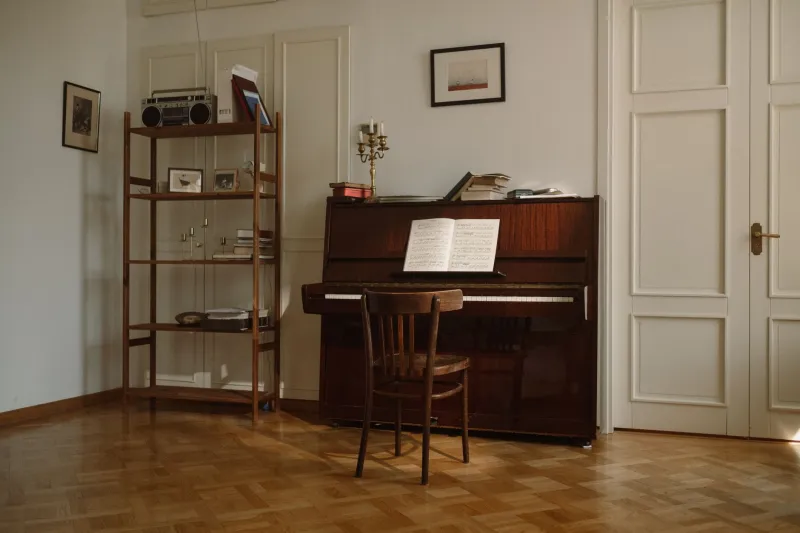
A typical upright weighs somewhere between 200kg and 350kg, most of it cast iron frame sitting high up. That combination — mass plus a high centre of gravity — is why piano moving is a genuine trade rather than a favour from a mate with a van.
What specialist piano movers bring: a proper piano trolley, stair-climbing skates, straps, blankets and the knack of tilting without tipping. Expect £250–£600 for an upright in most of the UK, more if there are stairs, tight turns or a long carry. Grands start around £500 and climb beyond £1,200 once a crane or hi-ab is involved for an upper-floor window lift.
One thing people forget: book a tuning for two to four weeks after the move. Pianos sulk after a change in humidity and a bumpy ride, and a slightly out-of-tune instrument is a much cheaper problem than a cracked soundboard.
Safes and cabinets: dense, bolted and awkwardly honest
Heavy secure storage is the item most likely to be underestimated, because it looks small. A domestic gun cabinet may weigh 30–80kg; a serious safe can be 250kg or more in a footprint the size of a microwave.
First job is to check whether it is bolted down — many are, into brick or floor joists — and to empty it completely. Removing the door where the design allows can cut the weight dramatically and make the whole thing manageable on a sack truck. Firearms certificate holders should also keep the relevant paperwork handy and confirm the destination storage meets the same standard before the thing leaves the wall.
A specialist safe mover or a two-person crew with proper equipment will typically charge £200–£450 depending on weight and steps. Do not let a man-and-van quote that clearly assumes a washing machine cover this one.
Giant houseplants: the load that sulks if you look at it wrong
Big specimens — mature monsteras, fiddle-leaf figs, olive trees in pots, palms that have taken over a bay window — create two problems at once: size and temperature.
Size is solvable. A 2m plant will not fit in a hatchback, and it will not survive being squashed flat in a van. Measure the pot, the spread of the leaves, and the height of the tallest stem. Some plants travel happily lying at an angle if the pot is wrapped and the stems supported; others snap at the first bend.
Temperature is the real risk. UK winters are brutal on tropical plants, and a few minutes on a cold pavement in January can blacken leaves permanently. Plants should travel in the heated cab, not in the back of a refrigerated-feeling hire van, and they should be the last thing loaded and the first thing unloaded.
Two practical warnings. Many removals policies exclude living things entirely, and most van hire firms will charge a cleaning fee for spilled compost, so bag the pot properly. If you are crossing to Northern Ireland, check plant passport requirements for your species before you go.
Treadmills and the machines that never fold as much as promised
A treadmill is a 90–150kg lever with a running belt that does not enjoy being dragged. Lock the belt, remove the console if it unbolts, and strap the frame so it cannot unfold mid-carry. The same logic applies to rowing machines, multi-gyms and that elliptical you bought in January 2021. Take photographs of the cable routing before you disconnect anything — you will not remember.
Inherited furniture and the sentimental sideboard
Solid mahogany sideboards, grandfather clocks, wardrobes built for a house that no longer exists: these are the items that fail on corners rather than on weight. The trick is diagonal maths. A sofa that is 2.1m long and 0.9m deep will not pass a 0.75m doorway at any angle. Measure the diagonal of the opening and the smallest cross-section of the item.
Also check for woodworm, damp and loose joints before the move rather than after — a piece that crumbles in transit is a piece nobody wants to argue about with an insurer.
What access really costs you
Listed buildings are the wild card. Original doorways are often narrow, and removing a door leaf or frame in a listed property can need consent from the local conservation officer. Usually a simple lift-off-and-rehang of the door is fine, but ask the freeholder or landlord in writing first. Managed blocks add their own friction: lift protection boards, booking slots, move-in deposits of £100–£500, and rules that quietly ban moves at weekends.
Who to ring, and what it costs
- Specialist movers: best for pianos, safes and anything with a hoist. £250–£1,500 depending on the item.
- Two-person man-and-van: fine for treadmills, plants and ordinary heavy furniture. Roughly £50–£80 per hour in London, £35–£55 elsewhere, usually with a two or three-hour minimum.
- DIY with mates: genuinely viable for plants, a treadmill and a sideboard. Not viable for a 300kg upright and a staircase.
The insurance small print
Standard removals cover is usually liability-based, not all-risks, and it commonly excludes items you packed yourself, living plants, and anything the insurer considers to need specialist handling. Goods-in-transit cover on a man-and-van is often capped per item as well as in total. Before booking, ask three questions: is a piano or safe covered at all, what is the per-item limit, and does the excess make a claim pointless?
Then get the awkward item on the inventory in writing, with a photo. Ten minutes of admin now saves an argument you will not enjoy later.