Kerb-to-Kettle: Putting a Number on the Van-to-Door Carry Before Moving Day
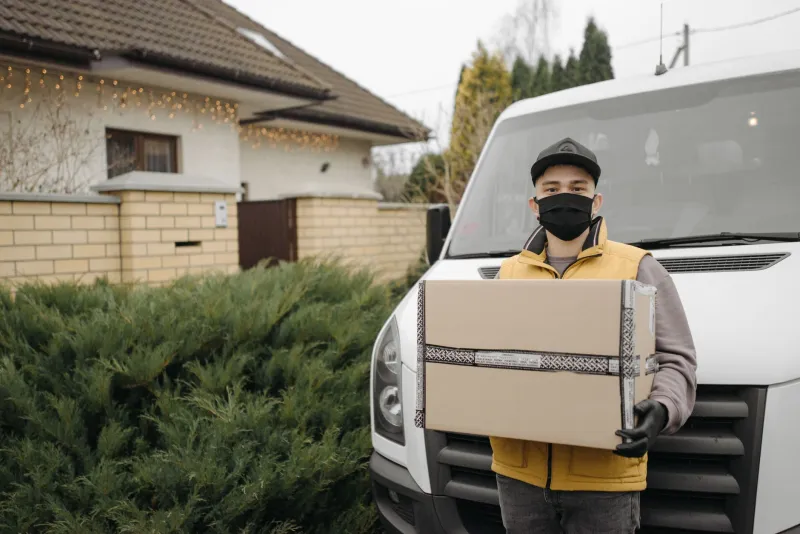
Most moving quotes look reassuringly simple: a van, a crew, a price. Then the van pulls up forty metres from your front door, the pavement has a two-step kerb, the hallway turns left at the coat rack, and someone mentions a long carry. Suddenly the quote has a little more room in it than you thought.
The last stretch, from kerb to kettle, is where a smooth move can quietly become a moving-day surcharge. It is not usually bad faith. Removal firms price the job they can see, and a kerbside quote assumes the load can get from vehicle to property without drama. The trick is to measure and describe that carry zone before you book, so the price you agree reflects the walk your boxes will actually take.
Why the kerb is not the finish line
A removals quote can be built on different assumptions. Some firms price to the door. Others price to the kerb, especially where parking is tight or the property has awkward access. That difference matters. If the crew has to park down the road, negotiate a shared driveway, wait for a neighbour to move a car, or carry everything up two flights before they even reach your hallway, the job takes longer. More time means more labour, and labour is what you are really buying.
This is not about squeezing a discount. It is about giving the estimator an honest picture. A firm that knows about the thirty-metre walk, the six steps and the narrow Victorian hallway can plan the right crew size, bring the right trolleys, and price the job properly. A firm that discovers it on the day has to improvise. Improvisation is rarely free.
Measure the carry like an estimator
You do not need a laser measure to make a useful note. Walk the route from where the van will park to the room where the first boxes will land. Count your paces and multiply by roughly 0.75 metres. That gives you a working carry distance. Then look for the details a tape measure misses:
- Is the parking bay directly outside, across a road, or around a corner?
- Are there kerbs, steps, ramps, gravel, grass or uneven paving?
- Does the route pass through a gate, a shared passage or a tight side return?
- Are there low branches, bollards, wheelie bins or parked cars that shrink the path?
- Does the front door open onto a hallway wide enough for a sofa, or does it open against a wall?
A short video walk-through is often more useful than a paragraph of description. Start at the likely parking spot, walk to the door, open it, turn into the hallway, and point out the stairs or lift. Send it with your booking enquiry. It takes two minutes and saves a lot of guesswork.
The vertical bits: stairs, lifts and tight turns
Distance is only half the story. Height matters just as much. Count the steps from pavement to front door, then from hallway to landing. A ground-floor flat with a straight run from kerb to living room is a different job from a third-floor walk-up with a bend in the stairs.
If there is a lift, check its size before you assume it will take a mattress or a wardrobe. Note the door width, the internal depth, and whether the lift needs a key or a booking. In some blocks, the moving slot is reserved through a managing agent, and the crew may need to use a service lift or protect the lobby. Those rules are not obstacles for their own sake, but they do affect timing.
Narrow hallways and sharp turns slow a crew down because every large item has to be angled, lifted and sometimes partly dismantled. If a piano, sofa or American-style fridge has to go around a tight corner, say so early. The estimator can then decide whether more people, a different route or a partial dismantle is the sensible plan.
The stuff that slows a crew down
Some carry costs hide in plain sight. A gravel driveway makes trolley wheels sink. A wet day means extra protection and slower movements. A concierge may need keys signed in and out. A gated development may have a barrier code and a time limit for vans. A narrow street may mean the van has to park at the end of the road while the crew shuttles boxes on a sack truck.
Parking is part of the carry zone too. Check whether a suspended bay, permit or loading restriction applies. If the van cannot stop near the door, the carry distance grows. That is not a reason to panic, but it is a reason to mention it. A firm that knows about the parking reality can build it into the quote rather than discovering it at 8am.
Questions to ask before you book
When you compare quotes, ask what the price actually covers. Is it kerbside or door-to-door? Does the firm charge extra for a long carry, and how do they define one? Will they carry items up stairs, and is there a limit on floors? What happens if the lift is out of order? Do they need a parking permit, and who arranges it?
It also helps to ask how the crew will protect the route. Floor runners, door protectors and stair guards are small details that tell you whether a firm has thought about the carry. If you are moving into a rental, protecting the hallway and stairwell is not just good manners. It is deposit insurance.
Finally, get the access notes in writing. A short email confirming the parking situation, carry distance, stairs, lift and any awkward items gives everyone a reference point. If the job changes on the day, you have a fair starting point for the conversation.
Build a carry plan, paid or DIY
If you are hiring a crew, your job is to describe the carry zone clearly. If you are doing it yourself, your job is to make the carry zone safer and shorter. Use a proper sack truck or trolley, wear gloves, wedge doors open, protect floors, and move the heaviest items first while you still have energy. Keep the route clear and avoid stacking boxes in the hallway where they become a trip hazard.
At Keep It Moving, we like a plan that starts before the van arrives. Measure the walk, film the turns, count the steps and ask the awkward questions early. The last hundred metres should not be a surprise. With a bit of prep, it is just another part of the move, priced and planned like everything else.