The Van That Comes Back Empty: Why Return Loads Belong in Your 2026 Budget
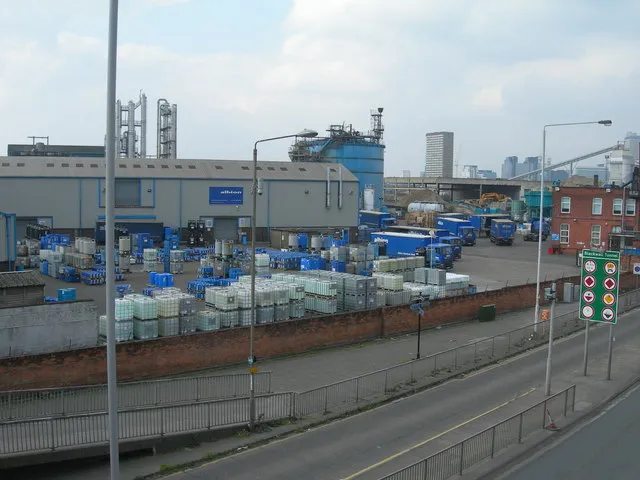
Photo: Danny Robinson, CC BY-SA 2.0, via Wikimedia Commons
There is a stretch of the M6 where you can watch the same thing happen all day: a trailer heading south fully loaded, and its opposite number heading north with little more than air in the back. Same road, same diesel, same driver, roughly double the carbon per useful pallet. Nobody chose that. It is just what happens when every business books its own transport in isolation.
The argument for 2026 is straightforward. Margins are tight, emissions reporting is no longer optional for most supply chains, and not one of those problems requires you to buy a single new vehicle to solve. It requires you to stop treating each delivery as a private, bespoke event and start treating it as a seat on a bus that was already going that way.
The most expensive thing on the motorway is fresh air
Empty running is not a fringe issue. It is baked into the shape of UK trade: goods flow into the country and into the cities, and a lot of the return legs are structurally light. Hauliers plan around it, price around it, and quietly absorb it. Small firms, meanwhile, tend to book a dedicated van for four pallets because that is the only thing their supplier, their 3PL, or their fraught ops manager has ever suggested.
That four-pallet van might be going somewhere near your customer anyway. The question worth asking is not "who can deliver this for me" but "who is already delivering into that postcode this week, and do they have deck space?"
Why the empty leg stays invisible to small firms
Three reasons, mostly. First, the buying habit: transport gets booked per shipment, not per corridor, so nobody ever sees the pattern. Second, perceived risk: part-loads sound like something that loses your stock for a fortnight. Third, and most common, nobody asks. Pallet networks and groupage have been mainstream for years, yet plenty of businesses still assume part-load means slow.
It does not, necessarily. It means your pallet waits for the next scheduled run rather than setting off the moment it is wrapped. If your delivery promise is "early next week" rather than "by 9am tomorrow", you can usually ride a route that already exists.
How backhaul pricing actually works
There is no single rate card, but the logic is consistent. You are buying marginal space, not a journey, so the price reflects:
- Deck or pallet space — per pallet, per linear metre of trailer, or per kilo on lighter goods.
- Route fit — a drop that sits two minutes off a motorway junction is cheap; one that adds forty minutes of B-road is not.
- Handling — tail-lift, kerbside only, booked time slots, and anything requiring two people or a pump truck.
- Waiting time — usually free for a short window, then charged by the hour.
- Return of equipment — pallets and stillages have a value, and unreturned ones get invoiced.
Because the carrier's fixed costs are already covered by the primary load, backhaul quotes can come in well below a dedicated run. They can also come in high if your drop is awkward. The trick is to make your consignment easy: palletised, labelled, forklift-ready, and flexible on day.
Five questions before you share deck space
- Whose insurance covers the goods in transit, and up to what value per tonne? Ask for the actual figure, not "fully insured".
- Who loads and secures? Restraint standards matter — a loose pallet in a mixed trailer is everyone's problem.
- Is any leg subcontracted? It is normal in groupage, but you should know who is actually touching your stock.
- What does a claim look like? Time limits for notifying damage, the excess, and whether packaging standards will be used against you.
- What is the tracking and proof-of-delivery process? Photographic PODs and a live status feed should be standard by now.
Get the answers in writing before the first pallet, not after the first scratch.
The boring bits that protect your margin
Declare high-value goods properly. Most standard goods-in-transit cover sits at a modest limit per tonne, and a pallet of electronics can blow through it. If you are shipping anything valuable, unusual, or perishable, say so up front — nobody thanks you for surprising a carrier with a piano-shaped crate labelled "spares".
Also read the trading terms on packaging. A pallet that arrives crushed because it was wrapped in one layer of film and hope is a claim you will probably lose.
Timing is the whole trick
Flexible delivery windows are the currency here. If you can say "any day Tuesday to Thursday, kerbside, tail-lift, one pallet", you are easy to fit and easy to price. If you need a precise 90-minute window on a Friday afternoon in December, you are buying a dedicated vehicle whether you call it that or not.
So build slack into your promise. Offer customers a two-day window rather than a two-hour one. Batch your outbound consignments so they leave on the days your chosen network already runs your corridor. A little looseness in the promise buys a lot of efficiency in the execution.
Where it works, and where it doesn't
Return loads suit replenishment stock, non-urgent B2B transfers, sample runs, and anything that can sit on a pallet without complaint. They are a poor fit for just-in-time manufacturing feeds, temperature-controlled pharma, high-value single items, and anything a customer is already tracking minute by minute.
Be honest about which of those you are. The efficiency win is real, but not at the cost of the promise you made at the point of sale.
The carbon case, minus the greenwash
Two half-empty trailers are not the same as one full one, whatever the marketing says. But fewer vehicles moving the same tonnage is a genuine, measurable reduction — and it drops straight into the scope 3 transport figures most buyers now ask for. You are not buying an electric fleet; you are using the fleet that exists more sensibly. For most SMEs that is the fastest emissions win available, and it arrives with a lower invoice attached.
A first step you can take this month
Pull three months of despatch records and list them by corridor: origin, destination, pallet count, day of week. Nine times out of ten, a pattern appears — the same two or three routes, run thinly and inconsistently. Then ring the hauliers already working those lanes and ask two questions: what is your part-load rate for this lane, and what days do you run it?
That is it. No procurement project, no new vehicle, no software. Just fewer empty miles, tighter margins, and a delivery operation that stops paying for fresh air.